
The First Thing You Need to Know: It's Permanent
Once you paint brick, you own that decision. Removing paint from brick is extremely difficult, expensive, and often damages the brick surface in the process. Chemical stripping, sandblasting, and pressure washing can all affect the brick's face and mortar. If there's any chance you'll want to return to natural brick, this is not the project for you.
That said — most homeowners who do this project never look back. The transformation is dramatic, the maintenance profile is well understood, and the curb appeal impact is significant.
The Two Options: Paint vs. Limewash
Traditional Paint
Standard masonry paint forms a film over the brick surface. It provides excellent weather protection and UV resistance, and the color is consistent and bold. The tradeoff: because it's a film rather than a penetrating finish, moisture that gets into the brick from below (through the foundation or mortar) can push the paint film off the surface, causing peeling.
In Florida's wet climate, this means the masonry primer and paint selection is critical. We use masonry-specific primers that allow vapor transmission while still creating a bonded surface for the topcoat. Sherwin-Williams Loxon Conditioner followed by Emerald Exterior is our standard specification for painted brick in Tallahassee.
Limewash
Limewash is a mineral-based finish made from slaked lime that penetrates into the brick rather than forming a surface film. The result is a softer, more textured appearance with natural variation — it looks less "painted" and more like aged European masonry. It's also breathable, which reduces the moisture-trapping risk that traditional paint carries.
The tradeoff: limewash requires more frequent reapplication (every 5–7 years vs. 10–12 for a well-applied masonry paint), and the look is more organic and varied rather than bold and uniform. Some homeowners love this; others want the clean, consistent look that only traditional paint delivers.
Prep Work for Brick: What's Different
Painting brick requires more prep than painting wood siding or stucco. Here's what a professional exterior brick painting project includes:
- Mortar inspection: Deteriorated or crumbling mortar needs to be tuckpointed before painting. Painting over bad mortar traps moisture and accelerates failure
- Power washing: 1,500–2,500 PSI to remove efflorescence (white mineral deposits), mold, mildew, and dirt that would prevent adhesion
- Efflorescence treatment: Heavy efflorescence may require acid washing to fully neutralize the mineral deposits
- Full drying time: Brick must be fully dry before any coating is applied — in Florida, that often means 3–5 days after washing
- Masonry primer: A vapor-permeable masonry primer is non-negotiable. Standard latex primer is not appropriate for brick
- Caulking: Gaps around windows, doors, and where brick meets trim need to be caulked with a high-quality paintable elastomeric caulk
Color Strategy for Florida Brick Homes
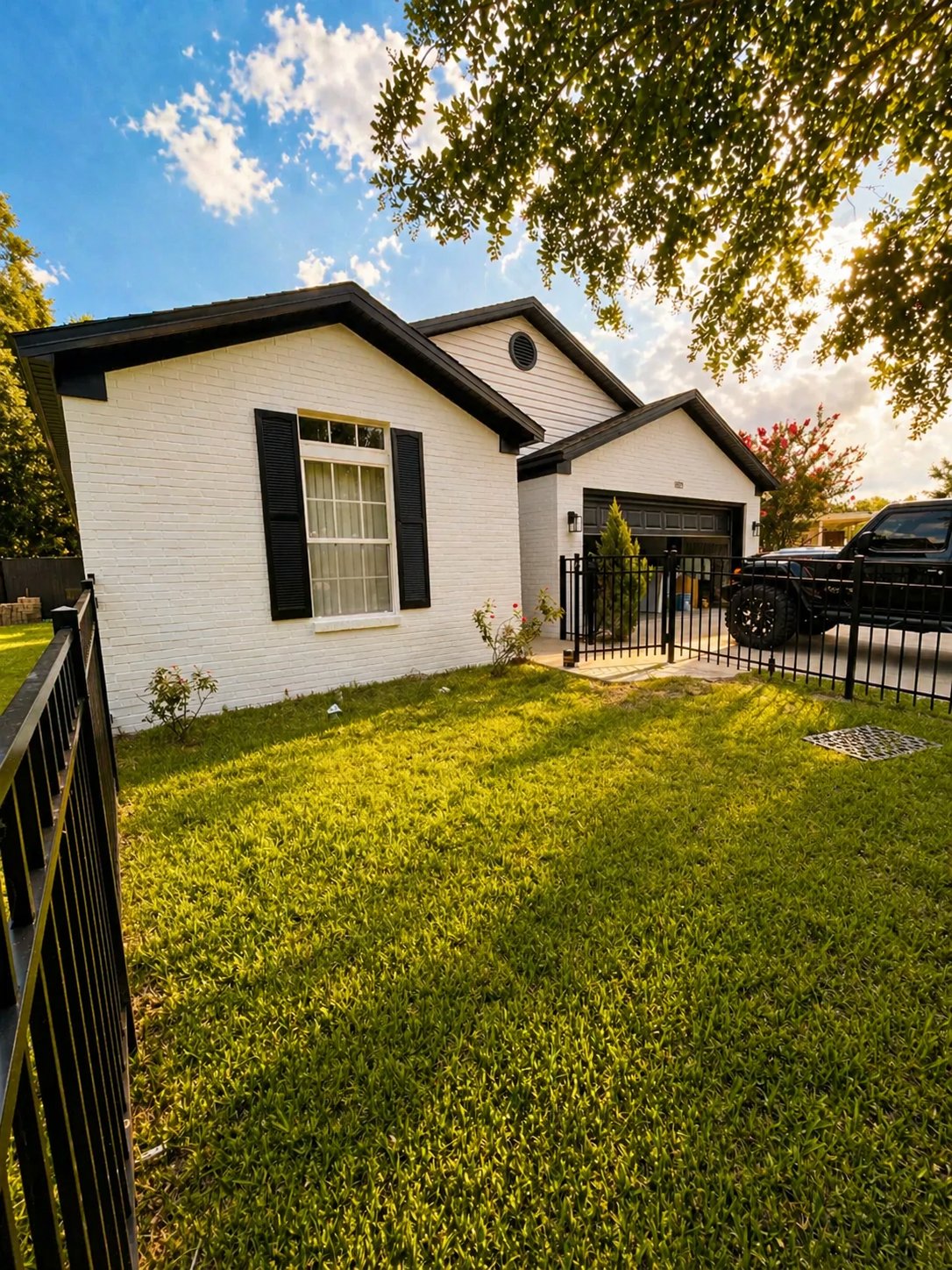
The most popular painted brick colors in North Florida right now are Sherwin-Williams Extra White (SW 7006), Alabaster (SW 7008), and Repose Gray (SW 7015). White and off-white tones reflect Florida's intense sun rather than absorbing heat — which is practical as well as aesthetically clean.
For contrast, dark shutters and trim in Tricorn Black (SW 6258) or Iron Ore (SW 7069) create the sharp curb appeal contrast that works particularly well with Tallahassee's traditional brick ranch and colonial architectural styles.
Brick homes with existing colored trim benefit from coordinating the trim color with the garage door — an often-overlooked detail that makes the final result look intentional and professional.
The Maintenance Reality
A properly painted brick exterior in Florida should hold its appearance for 8–12 years before needing a full repaint. Periodic power washing (every 2–3 years) to remove mold and mildew keeps it looking fresh between full paint cycles. Watch the caulk lines around windows and doors — these are the first places to check when doing annual maintenance inspections.
"We'd been looking at our orange 1970s brick for fifteen years wondering if we should do something. The painted white transformation took two days and immediately added value — and every neighbor on the street has complimented it." — Tallahassee homeowner
When to Skip It
Painting brick is not the right choice if: your brick has significant moisture intrusion issues that haven't been resolved at the source; your mortar is in poor condition throughout and you're not prepared to invest in tuckpointing; or the brick is a historic material that has preservation value (older homes in Tallahassee's historic districts may have local guidelines around exterior alterations).
Thinking About Painting Your Brick?
We'll assess your brick's condition, walk you through the paint vs. limewash decision, and give you a detailed quote — at no cost.
Request a Free Estimate