
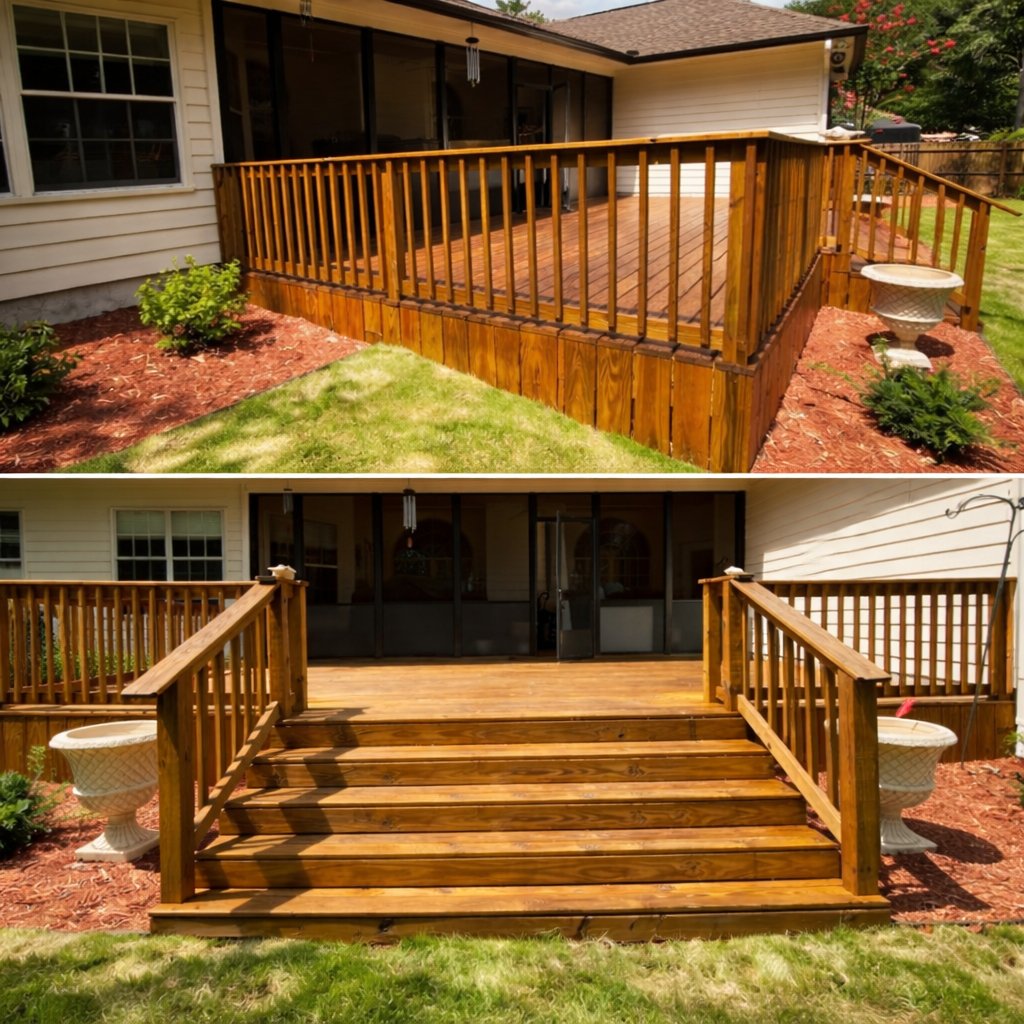
Why Florida Is Different
Most deck stain and paint products are formulated and tested for temperate climates. Florida is not a temperate climate. Tallahassee averages 56 inches of rain per year, summer humidity consistently exceeds 80%, and UV index readings from May through September rank among the highest in the continental United States.
The result: a deck that might need restaining every 4–5 years in North Carolina needs attention every 2–3 years in Tallahassee — sometimes sooner if the wrong product was used to begin with.
The 3 Product Categories
1. Penetrating Oil Stains (Transparent / Semi-Transparent)
Oil-based penetrating stains soak into the wood fiber rather than sitting on top of it. They allow the natural grain to show through, resist peeling, and are easier to recoat without full stripping. The tradeoff: they require more frequent reapplication (every 1–2 years in Florida) and offer less UV protection than film-forming products.
Best for: newer wood that's in great shape, homeowners who want a natural wood look, decks with good drainage and airflow.
2. Solid-Color Stains (Film-Forming)
Solid stains form a protective film on the surface and offer excellent UV resistance and color consistency. They last longer between applications but can peel if moisture gets underneath — which in Florida's climate requires impeccable prep and application to avoid. Recoating requires cleaning and light sanding but not full stripping as long as previous coats are still adhering.
Best for: older decks with some weathering or discoloration you want to cover, homeowners who prefer a uniform color over natural grain.
3. Deck Paints
Deck paint provides the most UV and moisture protection but forms the thickest film — which means it's also most prone to peeling when moisture gets trapped beneath it. Once you're in a paint system, you're committed to maintenance paint cycles. We generally don't recommend paint for horizontal deck surfaces in Florida unless the deck is covered and well-protected from direct rain.
When to Restain: The Water Test
Splash a small amount of water on your deck. If it beads up, your current finish is still protecting the wood. If it soaks in within 30 seconds, the wood is unprotected and it's time to restain. Don't wait for visible graying, cracking, or splinter formation — by then, the wood has already sustained UV damage that shortens its lifespan.
Prep Is Everything
The single biggest factor in how long your deck stain lasts is preparation. A beautiful stain applied to a dirty, moldy, or previously-coated deck will fail prematurely — guaranteed. Here's what proper prep looks like:
- Power washing: Remove dirt, mold, mildew, and loose old finish. Use a wood-appropriate pressure (600–1200 PSI) — too much pressure damages the wood fibers
- Stripping old finish: If the previous coat is still adhering well, you may be able to clean and recoat. If it's peeling or flaking, full stripping is required before new product will bond properly
- Brightening: A wood brightener (oxalic acid solution) restores the wood's natural pH after cleaning and opens the grain for better stain penetration
- Drying time: Wood must be completely dry before staining — typically 48–72 hours after washing in Florida's climate, longer after heavy rain
- Nail and screw setting: Any protruding fasteners should be countersunk and the holes filled to prevent rust staining
Timing Your Project
In Tallahassee, the ideal window for deck staining is October through April. Summer afternoon thunderstorms can wash fresh stain off a deck within hours of application, and extreme heat causes product to dry too fast, reducing penetration and creating lap marks. Morning application with temperatures between 50°F and 90°F and no rain forecast for 24–48 hours is the target condition.
The Gazebo and Fence Factor
If you have wood fencing, a pergola, or a gazebo on the property, coordinate that work with your deck project. Staining multiple wood surfaces at once is more economical than separate mobilizations, and a consistent stain color across fence, deck, and pergola creates a cohesive outdoor living space that photographs well and adds genuine curb appeal.
"Our deck was gray and splintering after just four years. SVP stripped it back, brightened the wood, and applied a semi-transparent stain — looks like new cedar again. They also did the fence and pergola in the same color. Best outdoor investment we've made." — Tallahassee homeowner
DIY vs. Professional
Deck staining is one of the more accessible DIY painting projects — if your deck is in good condition and doesn't require stripping. Where homeowners most often go wrong: skipping the brightener step, applying stain to damp wood, or using consumer-grade products that don't hold up to Florida's climate.
If your deck has significant mold, old peeling finish, or structural weathering, professional restoration is the smarter call. The prep alone — pressure washing, stripping, brightening, and drying — is the bulk of the labor, and doing it wrong wastes whatever product you apply on top.
Free Deck Staining Estimate
We'll assess your deck's current condition and recommend the right product and prep approach — at no cost.
Get a Free Estimate